Skip to content
Custom Flag Nation Home » Blog

Blog

This is for all blog posts.

Selecting aviation decor

Choosing Aviation Wall Decor: Size, Placement, and Display Ideas

Selecting aviation wall decor is about more than filling empty space. The right piece represents history, service, and personal connection. Whether the goal is honoring a retirement, remembering a deployment, or simply celebrating pride in aviation, choosing the proper size and placement makes a major difference. A good display should feel intentional, visible, and meaningful. Start With the Aircraft or Mission Most people begin by asking which design looks best. A better starting point is asking which aircraft or mission meant the most. Did they spend years working on the F-4 Phantom II?Were they part of carrier aviation?Did they fly or support Wild Weasel missions? The answer usually makes the decision easier. Once identity is clear, everything else falls into place. Bigger Is Usually Better Aviation art benefits from scale. These aircraft were powerful, loud, and impossible to ignore in real life. Smaller pieces often fail to capture that presence. Larger formats tend to: ✔ draw attention immediately✔ become conversation starters✔ anchor a room✔ photograph well This is one reason many veterans gravitate toward large aircraft flags rather than small framed prints. Common Places People Display Them You’ll frequently see aviation decor in: Each location benefits from strong visibility. If someone can walk past it without noticing, it may be too small. Consider the Viewing Distance A flag behind a… Read More »Choosing Aviation Wall Decor: Size, Placement, and Display Ideas

military gift ideas

Military Retirement Gifts & Veteran Display Ideas

Every military career eventually reaches a moment of transition. Uniforms are folded, final salutes are exchanged, and a lifetime of service becomes memory. Choosing the right way to honor that chapter can feel overwhelming, especially for families and friends who want something meaningful rather than ordinary. The best retirement gifts are not just objects. They are reminders of identity, sacrifice, and belonging. What Makes a Gift Truly Meaningful People rarely remember generic presents. What stays with them are items tied directly to their experience — the aircraft they maintained, the squadron they served with, the mission that defined their deployment. That is why gifts connected to specific platforms such as the F-4 Phantom II, the A-6 Intruder, or modern fighters often carry far more emotional weight than something off the shelf. They represent lived history. Visibility Matters Large, prominent displays tend to resonate more than small keepsakes. They create immediate recognition and invite conversation. Visitors ask about them. Stories begin. Names are remembered. Whether placed in a home office, workshop, or gathering space, a bold piece of aviation decor helps keep service visible long after active duty ends. Many families find themselves drawn toward aircraft heritage flags because they are striking, personal, and easy to display. Gifts from the People Who Know Veterans often appreciate items chosen by people who… Read More »Military Retirement Gifts & Veteran Display Ideas

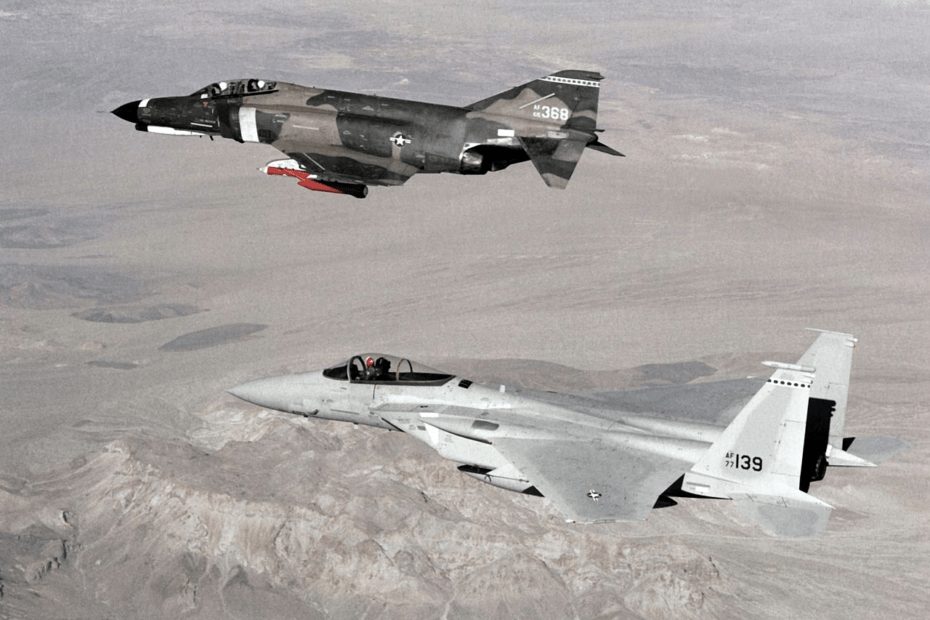
F-4 and f-15 in flight

What Replaced the Phantom? How Fighter Aviation Evolved

Few aircraft left a shadow as large as the Phantom. When it began to retire from frontline service, the question was unavoidable: what could possibly replace a jet that had done so much, in so many roles, for so long? The answer would shape the next half-century of fighter aviation. The Benchmark the Phantom Set The F-4 Phantom II proved that one aircraft could handle air superiority, strike, reconnaissance, and electronic warfare missions. It carried powerful radar, heavy weapons, and the speed to survive in hostile environments. But combat experience also revealed areas for improvement. Crews wanted better maneuverability, more integrated avionics, and aircraft designed around the lessons learned in demanding real-world operations. The next generation would deliver exactly that. Enter the Eagle The F-15 Eagle emerged with a singular focus: air dominance. Built with exceptional thrust, large wings, and advanced radar, it was optimized to win the fight against enemy aircraft before they could threaten the mission. Where the Phantom had been a versatile workhorse, the Eagle was a specialist designed around clear air superiority requirements. Pilots transitioning from earlier jets immediately recognized how far performance and situational awareness had advanced. For many veterans, seeing the Eagle also meant seeing the future that Phantom crews had helped make possible. The Multirole Revolution While the Eagle guarded the skies, another… Read More »What Replaced the Phantom? How Fighter Aviation Evolved

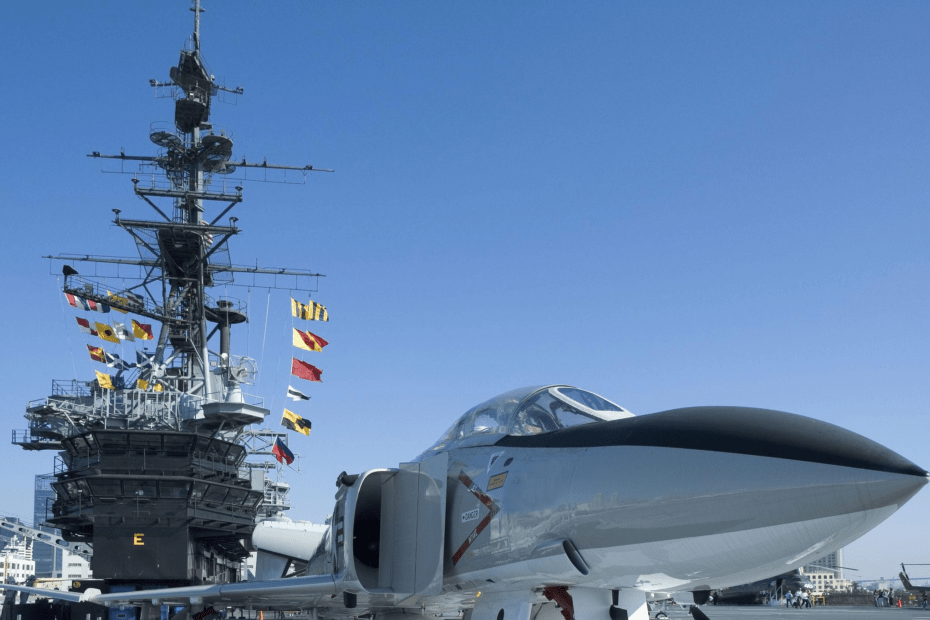
f-4 on a carrier

Aircraft Carrier Aviation: Taking Airpower to Sea

Operating high-performance aircraft from a moving runway in the middle of the ocean remains one of the most demanding tasks in military aviation. Aircraft carrier aviation combines precision flying, disciplined deck operations, and a level of teamwork unmatched anywhere else in the airpower community. For those who served aboard ships or supported embarked air wings, the flight deck is not just a workplace. It is a defining life experience. A Runway That Moves Unlike land bases, carriers pitch, roll, and turn with the sea. Wind over the deck, ship speed, and launch timing must be coordinated with remarkable accuracy. Pilots trust catapult crews, arresting gear teams, and handlers with every takeoff and recovery. The result is a ballet of machinery and people working in tight quarters, often at night, frequently in bad weather, and always under strict timelines. Aircraft Built for the Boat Some aircraft became inseparable from the identity of carrier operations. The F-4 Phantom II brought speed and heavy capability to fleet defense and strike roles. The A-6 Intruder proved invaluable for all-weather attack, while the A-7 Corsair II delivered precision with efficiency. Later generations would see aircraft like the AV-8 Harrier operate from amphibious ships, extending sea-based airpower in new ways. Each platform left its own mark on the sailors and Marines who kept them flying. Life… Read More »Aircraft Carrier Aviation: Taking Airpower to Sea

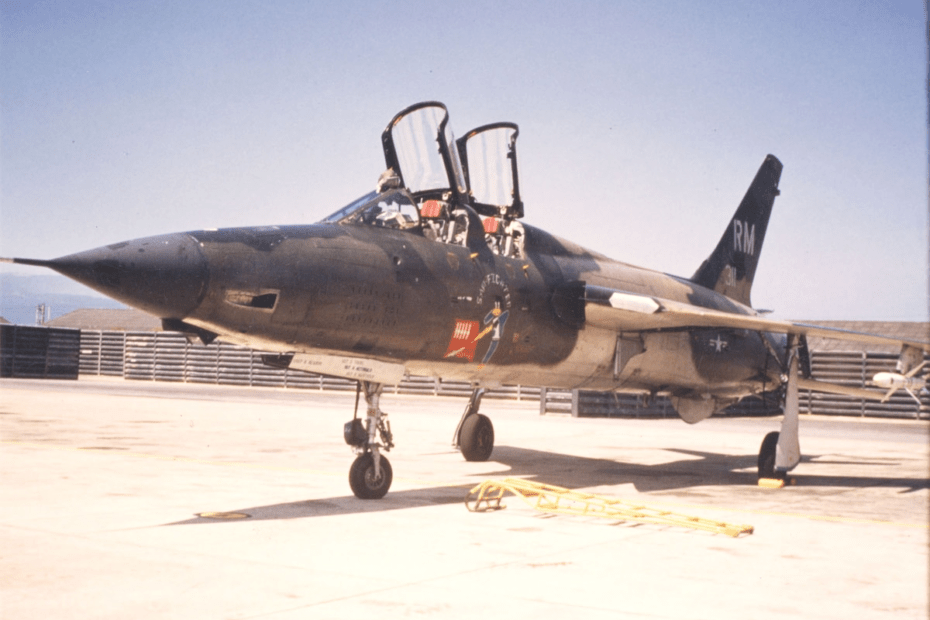
f-105 wild weasel

Wild Weasel & SEAD: The Mission That Hunted the Hunters

In modern air warfare, few missions demand more nerve than Suppression of Enemy Air Defenses, commonly known as SEAD. The job is brutally simple to describe and incredibly dangerous to perform: find the missile systems trying to kill everyone else and shut them down. The aircrews who volunteered for that responsibility became known as Wild Weasels, and their legacy remains one of the most respected in aviation history. Why the Mission Existed As radar-guided surface-to-air missiles proliferated, traditional strike tactics became far more dangerous. Aircraft that once worried mainly about fighters and anti-aircraft guns now faced sophisticated systems able to reach high altitudes with lethal accuracy. If those defenses could not be neutralized, everything else in the air campaign suffered. SEAD became the key that unlocked access for bombers, fighters, reconnaissance aircraft, and support platforms. The First Weasels The earliest Wild Weasel crews flew into combat with rapidly adapted equipment and evolving tactics. They had to detect radar emissions, identify threats, and either destroy or suppress them long enough for strike aircraft to survive. Among the aircraft that became closely associated with the mission was the F-105 Thunderchief, which shouldered some of the earliest and most punishing work. Later, the mission became strongly tied to the F-4 Phantom II, whose two-seat configuration allowed for intense coordination between pilot and electronic… Read More »Wild Weasel & SEAD: The Mission That Hunted the Hunters

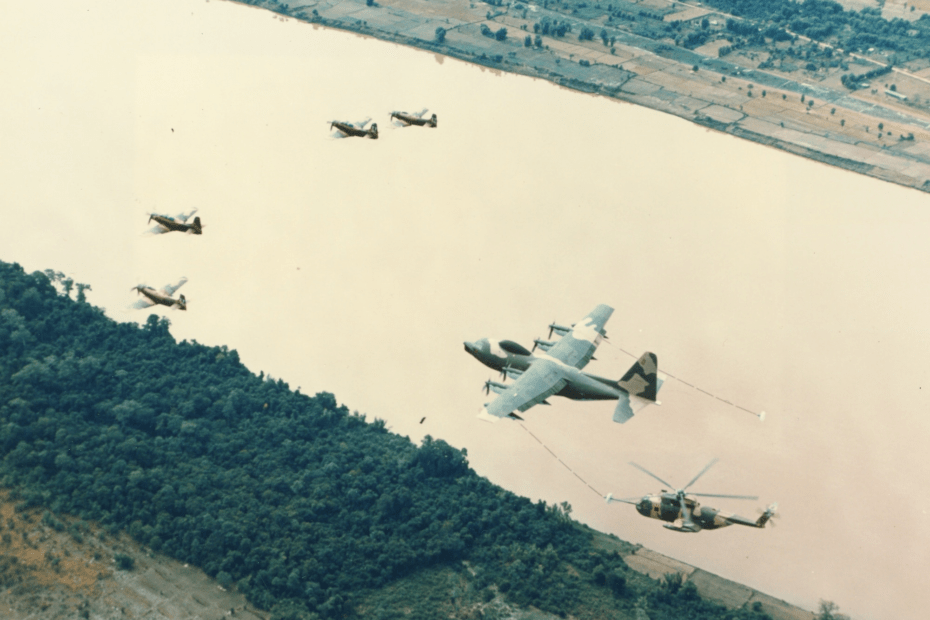
Vietnam era aircraft

Vietnam Era Aircraft: The Jets and Crews That Defined a Generation

The air war in Southeast Asia reshaped modern combat aviation. It tested technology, exposed weaknesses, forced tactical innovation, and forged identities that veterans still carry today. For many who served, aircraft from this period are not just machines from history books. They are the backdrop of youth, responsibility, fear, pride, and lifelong friendships. That is why interest in Vietnam-era platforms remains so strong among aviators, maintainers, historians, and collectors alike. A Different Kind of Air War Unlike previous conflicts, air operations over Vietnam involved dense radar coverage, advanced surface-to-air missiles, heavy anti-aircraft artillery, and capable enemy fighters. Crews had to adapt quickly. Survival often depended on teamwork, constant learning, and an ability to revise tactics almost overnight. The experience would permanently influence how future aircraft were designed, how pilots were trained, and how airpower was integrated with ground and naval operations. Fighters, Bombers, and Attack Aircraft Several aircraft became inseparable from the story of the conflict. The F-4 Phantom II emerged as one of the most recognized fighters of the war, flying escort, air superiority, strike, and suppression missions. Its speed and payload gave commanders flexibility, while its crews wrote many of the lessons that shaped modern air combat training. Carrier aviation brought aircraft like the A-6 Intruder and A-7 Corsair II into the fight, delivering strikes in difficult weather… Read More »Vietnam Era Aircraft: The Jets and Crews That Defined a Generation

The F-4 Phantom II

F-4 Phantom II

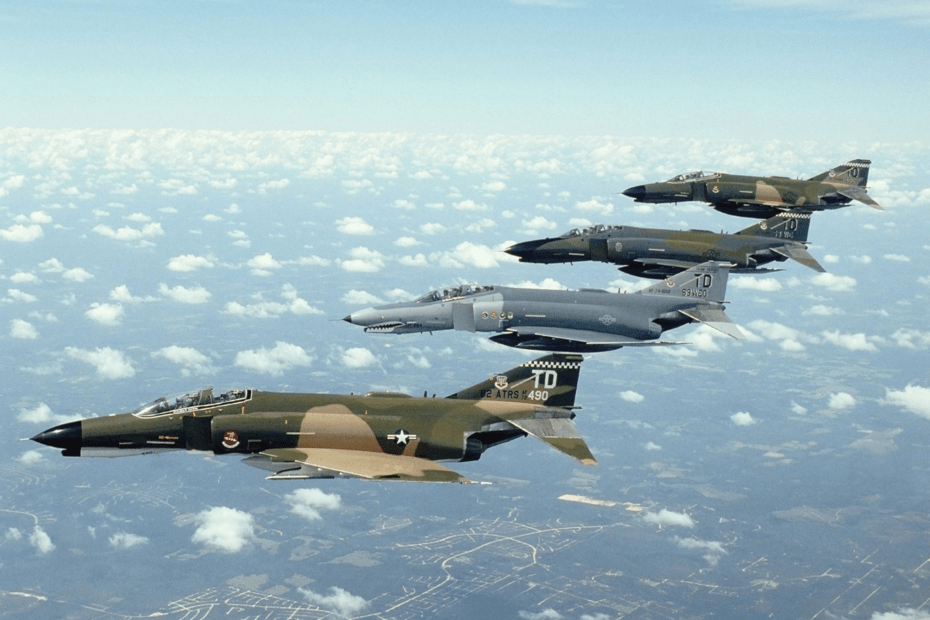
F-4 Phantom II: The Jet That Refused to Be Ignored Few combat aircraft ever built carried the physical presence of the F-4 Phantom II. It was loud, powerful, smoky, and unapologetically large. When one taxied past, people stopped what they were doing. When it left the runway in full afterburner, heads turned and conversations paused. For many veterans and enthusiasts, that connection never really fades. Long after the final flight, the Phantom lives on through reunions, squadron stories, photographs, and Phantom wall displays that keep the memory of the jet visible every day. If you’ve ever met someone who served around the Phantom, you already know: they don’t just “remember it.” They identify with it. Built for Power in a Dangerous Era The Phantom emerged from a period when designers prioritized speed, radar capability, and payload over sleek lines. Twin engines delivered tremendous thrust, while the large airframe allowed the aircraft to carry a serious mix of weapons and sensors. Over time it evolved from a fleet defense interceptor into a true multirole platform—one that could be tasked with air superiority, escort, strike, reconnaissance, and suppression missions depending on what the day demanded. It also operated from both aircraft carriers and long continental runways, which helped turn it into a cross-service icon rather than a single-mission specialist. That adaptability explains… Read More »F-4 Phantom II

Operation Midnight Hammer

Operation Midnight Hammer

Operation Midnight Hammer: A Covert Strike of Unprecedented Scale 🚀 On June 21–22, 2025, the U.S. Air Force orchestrated Operation Midnight Hammer, a meticulously planned and executed strike on Iran’s nuclear facilities. As Secretary of Defense Pete Hegseth and Chairman of the Joint Chiefs Gen. Dan Caine revealed, the mission was the largest B‑2 operational strike since modern history began—with seven B‑2 bombers delivering 14 x GBU‑57 “bunker buster” bombs in a single sortie, complemented by submarine‑launched Tomahawk missiles targeting Isfahan. B-2 Bomber and GBU-75 Bomb Flag From Custom Flag Nation and Available at Hangar 2A Merch 🎯 Mission Overview ⚡ Payload & Impact 📊 Significance & Aftermath ✈️ The B‑2 Spirit: Stealth Workhorse of the Night The highly capable Northrop Grumman B‑2 Spirit continues to play a pivotal role in operations necessitating deep penetration and minimal detection. 🛡️ Key Capabilities 🌍 Strategic Role Previously used post‑9/11, the B‑2 remains irreplaceable for strikes against deeply buried and fortified targets. Its role in Operation Midnight Hammer confirmed its status as a cornerstone of U.S. strategic capabilities. 💣 GBU‑57 Massive Ordnance Penetrator (MOP): The Bunker-Buster ⚙️ Design & Development 🕰️ History & Combat Debut 🎖️ Tactical Value 🏁 The Flag: B‑2 + GBU‑57 = Custom Flag Nation Flavor Nothing describes American airpower more vibrantly than a majestic flag—a nod to cutting‑edge military tech with flag… Read More »Operation Midnight Hammer

f-111 aardvark

F-111 Aardvark

F-111 Aardvark The Legacy of the F-111 Aardvark: A Swing-Wing Pioneer in Military Aviation Few aircraft encapsulate the daring innovation of Cold War aviation like the General Dynamics F-111 Aardvark. Designed as a multipurpose tactical fighter-bomber, the F-111 helped pioneer technologies that today’s military aircraft take for granted. Its revolutionary variable-sweep wings, terrain-following radar, and supersonic speeds at low altitudes gave it a unique blend of speed, agility, and versatility that cemented its place in aviation history. At Custom Flag Nation and Hangar 2A Merch, we’re proud to celebrate this legendary aircraft with our new F-111 Aardvark flag — a perfect tribute for aviation enthusiasts, veterans, and history buffs alike. We’ll dive into the history, technology, and enduring legacy of the Aardvark in this article and explain why this aircraft still captures the imagination decades after its retirement. The Origins of the F-111 Aardvark In the early 1960s, U.S. military planners realized they needed a new breed of aircraft. The Air Force required a long-range strike platform capable of delivering precision attacks at supersonic speeds, while the Navy wanted a carrier-based fleet interceptor with superior range and payload. The solution was the Tactical Fighter Experimental (TFX) program, which sought to create one airframe to serve both branches. General Dynamics won the contract in 1962, leading to the birth of the… Read More »F-111 Aardvark

Alaska Russian Aircraft Intercept

Alaska Russian Aircraft Intercept Today

Alaska Russian Aircraft Intercept Russian Military Aircraft Intercepted Near Alaska – April 12, 2025 What Happened, Why It Matters, and How NORAD Responded 📅 Published: April 12, 2025🛡️ By: Custom Flag Nation | Hangar 2A Merch on Etsy ✈️ Summary: U.S. Fighters Intercept Russian Aircraft Near Alaska On the morning of April 12, 2025, NORAD scrambled fighter jets to intercept a formation of Russian Tu-95 bombers and Su-35 fighters that entered the Alaska Air Defense Identification Zone (ADIZ). The aircraft never entered U.S. airspace but were closely tracked and shadowed until they turned back over the Bering Sea. This is part of a rising trend of Russian long-range patrols testing U.S. defenses — and serves as a powerful reminder of why American airpower and readiness still matter today. 🕒 Intercept Timeline Time (AKDT) Event 02:30 AM Russian aircraft detected entering the ADIZ 02:40 AM NORAD scrambles F-16s from Eielson AFB 03:15 AM Intercept over Bering Sea near St. Lawrence Island 04:10 AM Russian aircraft exit the ADIZ 💡 Want to show your pride in aircraft like the F-16 or KC-135? Check out our custom aircraft flags featuring the exact jets that defend the frontier. 🔍 Aircraft Involved in the Intercept 🇷🇺 Russian Tu-95MS “Bear” Bombers Role: Long-range nuclear-capable bomber Speed: 575 mph Range: 9,400 miles Notable: Iconic Soviet-era platform still… Read More »Alaska Russian Aircraft Intercept Today

Receive the latest news

Subscribe To Our Newsletter

Get notified about new products and articles